Russia's IT market is going through a period of deep transformation, and IT Outstaffing has become one of the most dynamic models for attracting talent. As of now, more than 61% of client companies already have experience working with this model, and the overwhelming majority of them (91%) continue to use outside specialists on an ongoing basis.
This format's popularity stems not only from businesses' drive to optimize costs, but also from the urgent need to adapt quickly to the rapid pace of technological change.
In an "overheated" labor market, where entry-level openings (junior QA testers, front-end coders) draw hundreds of candidates within the first half hour, the shortage of experts with 8+ years of experience (AI specialists, systems administrators) keeps getting worse – there are only a handful of them. IT Outstaffing becomes a key tool specifically for attracting these rare specialists, because they're hard to find and even harder to poach into full-time roles: companies hold on tightly to these experts, and their market salaries are very high. In this article, we'll take a detailed look at what this model actually involves, how it fundamentally differs from classic Outsourcing, and what trends will shape the IT talent economy by 2026.
What Is IT Outstaffing?
Let's start by defining the concept. In simple terms, IT Outstaffing means renting a specialist. Picture this: a specialist joins the team, sits in on meetings, works on tasks – fully integrated into the team – but legally remains an employee of another company, the service provider, which pays their salary and handles all the HR paperwork.
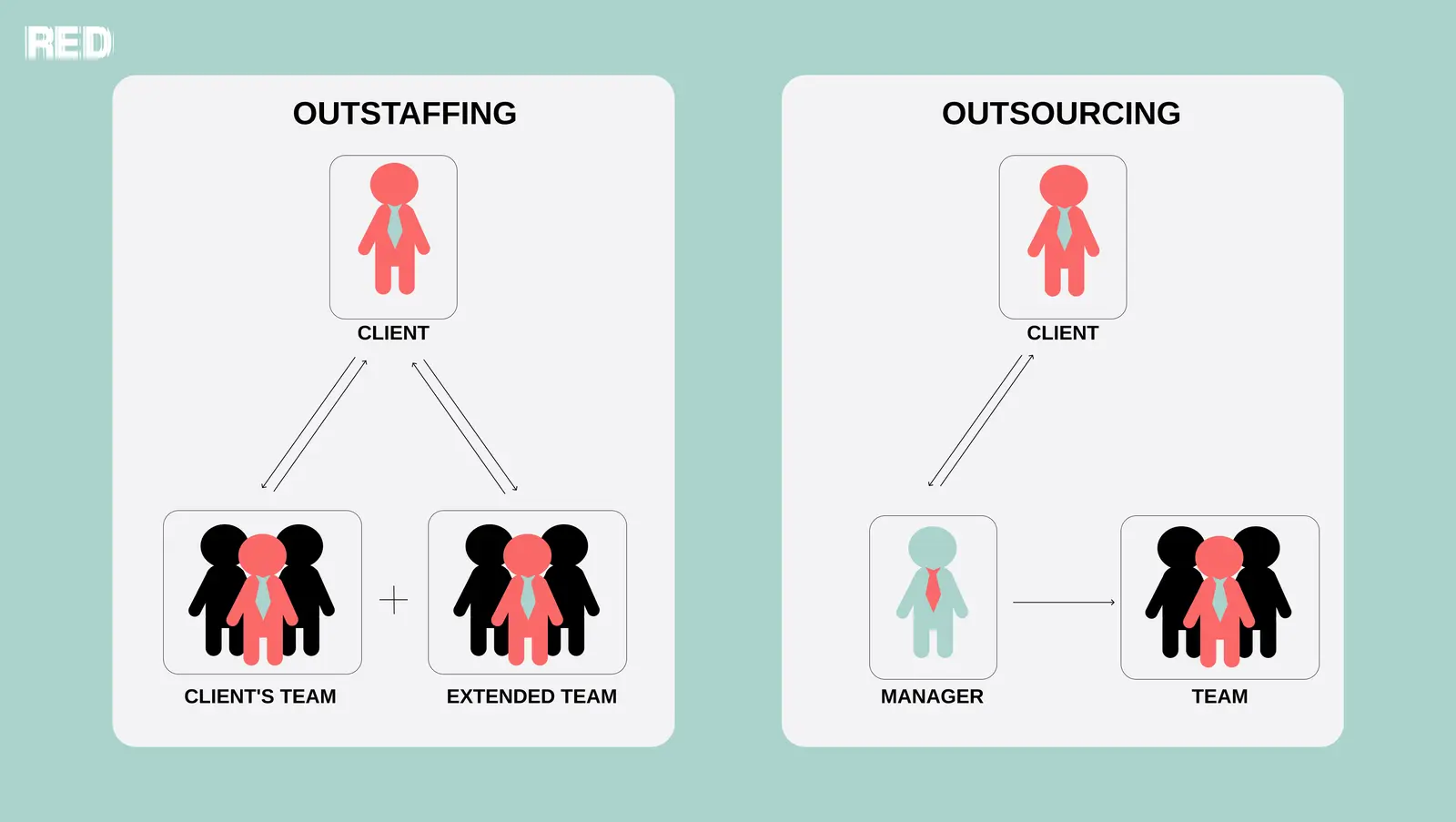
How is this different from Outsourcing?
With Outsourcing, the client company buys a result, while the contractor company independently manages the process of achieving it: choosing which tools to use and distributing tasks among its own employees. With IT Outstaffing, the client company fully manages the specialist and the workflow: the contractor company simply supplies the specialist to the team, where they carry out the work under the client team's management. It's the difference between hiring hands and a head versus buying a finished product.
Why Do Companies Need IT Outstaffing?
Businesses use this model for several reasons:
- The ability to bring on a specialist without expanding your own payroll budget: salaries, taxes (roughly 30% on top), sick leave, vacation pay, insurance. When you hire someone onto your staff, your payroll budget grows, and accounting and HR headaches pile up along with it. You can no longer just let the employee go – you have to cover their sick leave and maintain HR records. None of that applies with IT Outstaffing. You simply pay the service provider an agreed monthly fee, and they handle taxes, reporting, and all the paperwork themselves. Your payroll budget stays the same, and you don't face any extra administrative tasks.
- When you need to quickly scale up a team to launch or transform a product. The IT Outstaffing model typically means candidates are proposed within the first 3 hours; the search timeline can stretch out depending on how complex the request is, but on average, a position is fully filled within 2 to 14 days. Compare that to the standard recruitment process (hiring someone onto full-time staff), where the average time to fill a senior-level position is 3 months.
- When it's hard to find narrowly specialized professionals – AI, ML, or Golang developers, for example. Or when you need specialists with a legacy tech stack, who are in short supply on the market. Legacy tech stack specialists have become especially sought-after right now, as Russian service providers are being forced to switch to domestic software or revive older systems. In this new reality, IT Outstaffing isn't just a hiring model – it's a strategic tool for managing risk and scarcity. It lets companies keep their business processes running when the familiar world is falling apart.
IT Outstaffing is the right choice when you have a short project – say, 3 to 6 months – after which the specialists won't be needed anymore. Or when you're facing headcount restrictions and can't expand your staff. Also, if you need a rare specialist, you can "rent" them for a while from companies that already have them on board.
Pros and Cons of IT Outstaffing
| For Whom | Pros | Cons |
| For the client | Savings on HR resources, sharper focus on tasks, quick replacement | Slow offboarding (under 6 months isn't cost-effective) |
| For the specialist | Fast skill growth, projects are offered rather than sought out, no need to search on your own | Instability, worry about the future, no corporate perks |
How an HRAgency Solves These Problems
An HR agency helps you avoid these limitations. A staffing expert sends the specialist dozens of suitable projects to choose from. When a project wraps up, HR agencies start looking for the specialist's next project ahead of time. The client company doesn't have to worry about complicated processes, and the candidate doesn't have to worry about being left without a project.
What Trends and Forecasts Are Shaping the IT Outstaffing Market?
Here's what we're seeing:
Rate stagnation: salaries have stopped rising. Despite inflation, the growth in IT Outstaffing service pricing has nearly come to a halt. The reason is simple: the labor market has shifted in the employer's favor. There are fewer openings, competition is higher, and candidates are being forced to lower their salary expectations.
According to Skill Staff, by the end of 2025 expected salaries across most IT specializations had dropped by an average of 20-25%. Salary expectations fell the most among junior developers, with requested figures dropping by as much as 30-39%. This is especially noticeable in mobile development, PHP, C#/.NET, and UX/UI design. Relative stability held for DevOps engineers, architects, and 1C team leads, while narrow fields showed growth: ML/AI, Data Science, Go development, BI development, and load testing.
What does this mean for IT Outstaffing? Companies are having to streamline their team compositions, keeping only their most valuable specialists. The market has gotten tougher, but conditions remain favorable for rare experts.
A shortage of highly qualified specialists, despite the large number of candidates. Highly qualified specialists rarely enter the open market in the classic sense. Companies typically keep such specialists in place because they don't want to lose them, offering new stages of growth, or the specialists get poached before they even start looking on their own. In effect, a highly qualified specialist becomes invisible, which is exactly what creates the shortage. And it's worth remembering that the massive boom in IT courses from 2018 to 2021 produced a crowd of juniors, but genuine seniors with 8+ years of experience are people who started out back in the 2010s, when the industry was still small.
Demand for project-based specialists is growing, especially in IT. Companies are increasingly working with flexible employment arrangements, and candidates are looking for the chance to work across different industries: a bank today, retail tomorrow, oil and gas the day after. We've noticed that while large companies (banks, insurers, retail, oil and gas) used to be the main clients, mid-size businesses are now actively sending in requests as well. This may be tied to the fact that mid-size businesses have grown to the point of needing custom development for their internal processes. In the past, these companies got by with off-the-shelf solutions – 1C, cloud-based document systems, and so on – but at some point those systems stop covering the company's unique processes. Another reason may be the need for fast results, since the standard hiring process doesn't suit mid-size businesses. And another hypothesis is that mid-size companies have lost access to Western software and now need to build a replacement from scratch.
The Role of an HR Agency in IT Outstaffing
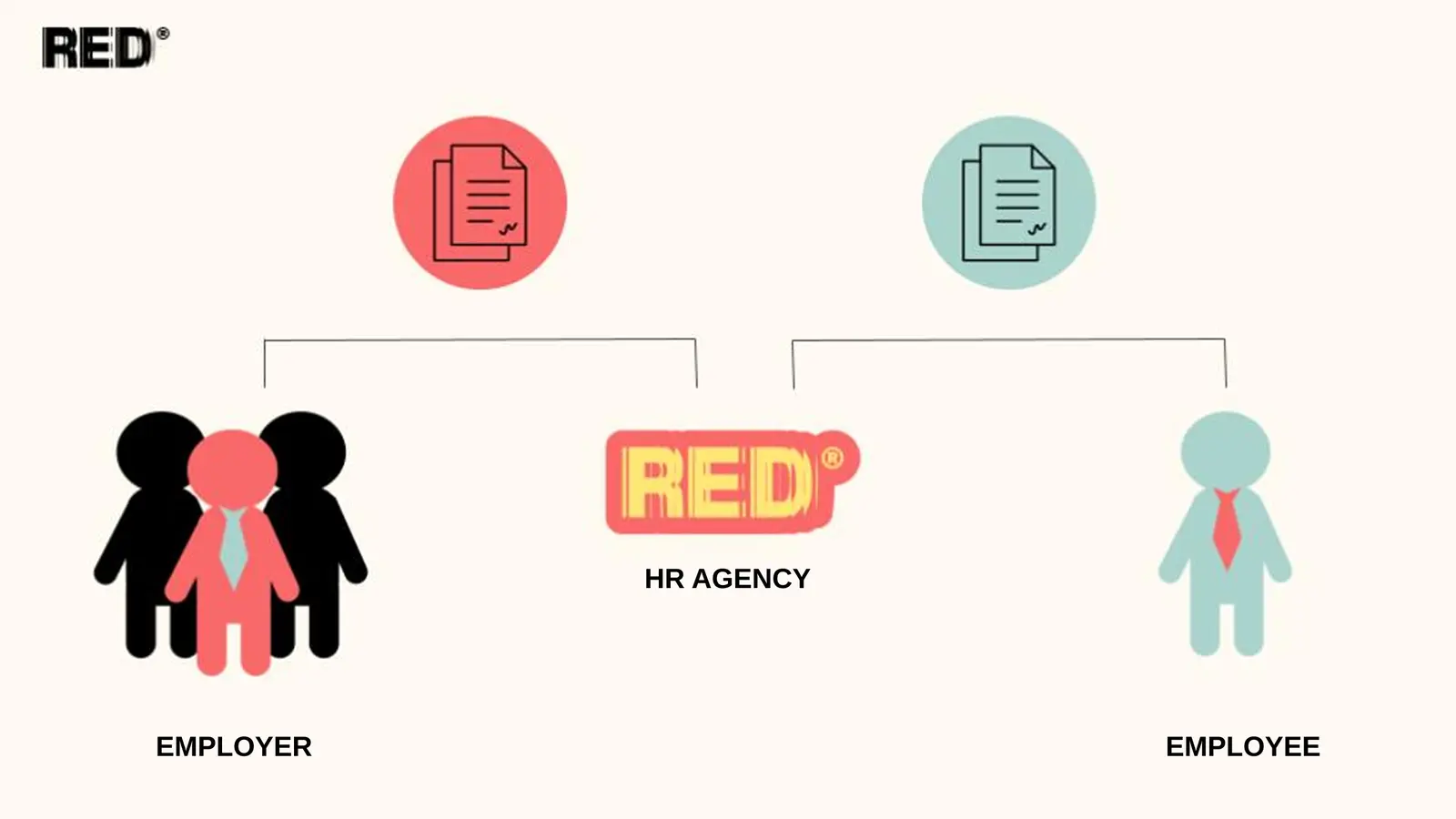
An HR agency acts as the contractor between the client and the candidate, and takes on:
- Sourcing and initial screening of candidates.
- Administration – onboarding the specialist, paying taxes and contributions, vacation pay, and sick leave.
- Supporting the specialist throughout the project.
For the candidate, an HR agency:
- Opens up access to unique projects at large companies.
- Helps with communication with the client.
- Provides support at every stage of the project.

Choosing an HR agency is an important step for companies looking for talent. The market is flooded with offers, and finding a reliable partner isn't easy. To make the right choice, consider a few key factors.
- First, assess the agency's reputation. Read client reviews and find out how long it's been operating. Companies that have stood the test of time usually have a solid reputation and a track record of positive experience.
- Second, look at the range of services offered. Some agencies specialize in placing managers, others in placing rank-and-file employees. Choose an agency whose services match your needs.
- Third, pay attention to the professionalism of the team. Talk to the account managers and ask about their experience and approach to recruiting.
- Finally, clarify the cost of services and the terms of cooperation. This will help you avoid misunderstandings and choose an agency that offers favorable terms.
Choosing an HR agency can significantly affect your company's success. Approach this decision responsibly and thoroughly, so you can find a reliable partner to help you bring on the best people.
And watch out for red flags. If an agency asks for payment six months in advance, refuses to offer a trial period, or can't explain who's liable in the event of a data breach, it's best to look elsewhere. A good agency isn't afraid of due diligence and will always provide references from previous clients.
IT Outstaffing is a practical tool when you need rare specialists or have to scale up a team quickly. It doesn't replace full-time staff entirely, but it solves specific problems: access to experts, tax savings, and flexibility.
There are downsides too: slow offboarding, instability for the employee, and questions around code ownership rights. But these can be smoothed over by choosing a reliable agency and reviewing the contract carefully.
The main thing is not to rush. Ask questions about replacements, timelines, and intellectual property rights. It will pay off.
RECRUITMENT AGENCY

Privacy Policy
Public Offer Agreement
Design by
MADEON
Developed by
Alexander Borisov
RED 2026 © All Rights Reserved